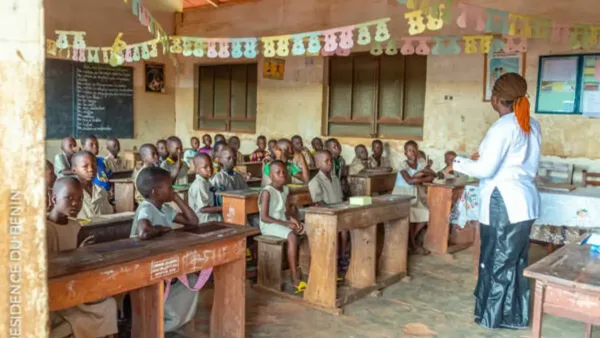
Students in Benin are preparing for the official resumption of classes on Monday, September 14, 2026, with some parents incorporating a viral TikTok trend into their back-to-school routines. The school year in Benin is set to officially resume classes on this date. The trend involves parents simulating scenarios of mockery or bullying with their children, prompting them to practice concise, calm, and assertive responses. This approach aims to equip students with strategies to address potential harassment effectively as they return to school. The viral parenting trend on TikTok specifically involves parents imagining situations of mockery or bullying with their children and having them practice short, calm, and assertive responses to these hypothetical scenarios.
Practicing Responses
The pre-term period in Benin is scheduled from September 7 to 11, providing a key window for such preparations. During this time, the TikTok trend providing anti-harassment preparation for students was presented as a viral parenting trend by the Australian press on September 8, 2026. This trend suggests five simple formulations as a starting point for students' responses to harassment. These include phrases such as, "I do not accept you speaking to me like that," which empowers children to set boundaries. The concise command, "Stop," is also recommended for immediate de-escalation. Other recommended responses aim to empower students to seek support, with examples like, "I am going to join my friends or an adult," and "I am going to talk to an adult," noting the importance of seeking help from trusted individuals. A further suggested phrase, "What you say does not determine my worth," focuses on building a child's self-esteem and resilience against verbal attacks and negative comments. These formulations are designed to be easily remembered and applied by children in various situations.
Expert Guidance and Limitations
UNICEF advises parents to engage with their children by listening calmly to their experiences and helping them process scenarios that have caused frustration. The organization suggests working with children to develop constructive and non-harmful responses to such situations, fostering their ability to react appropriately without resorting to aggression or further conflict. UNICEF explicitly advises parents to listen to their child calmly, think through scenarios that have frustrated them, and imagine constructive and non-harmful responses together. This collaborative approach helps children feel heard and supported, reinforcing the lessons learned from the TikTok trend.
StopBullying.gov provides specific recommendations regarding children's responses to bullying. The agency advises against instructing children to systematically ignore bullying incidents, as this can sometimes exacerbate the problem or make children feel unheard. It also cautions parents and guardians against encouraging children to resort to physical altercations, emphasizing that violence is not a constructive solution and can lead to further harm. StopBullying.gov specifically recommends not asking the child to systematically ignore bullying and not encouraging them to fight physically, reinforcing a non-violent, assertive approach.
For instances of cyberbullying, StopBullying.gov outlines several support measures. These include preserving any evidence of the harassment, such as screenshots or messages, which can be key for reporting purposes. It also advises blocking or reporting the accounts involved when appropriate, to limit further exposure to the harasser. The agency recommends guiding the child in their broader digital activities to ensure their safety and well-being online, teaching them responsible internet usage and privacy settings.
Broader Context and Support
If incidents of harassment become recurrent, involving threats, violence, social isolation, or significant emotional distress, a child should be able to rely promptly on a parent, a teacher, a school official, or a qualified professional for support. This guidance emphasizes the importance of a swift and reliable support system for children facing persistent or severe bullying, ensuring they do not have to endure such situations alone. The child must be able to quickly rely on these trusted adults or professionals if incidents are repeated, accompanied by threats, violence, isolation, or severe distress. UNICEF further advises parents to collaborate with the school when a child is experiencing bullying. This approach ensures that a full strategy, involving both home and educational institutions, can be developed to address the situation effectively and safeguard the child's well-being within the school environment. Working with the school allows for a coordinated effort to monitor the situation, implement protective measures, and educate all parties involved.