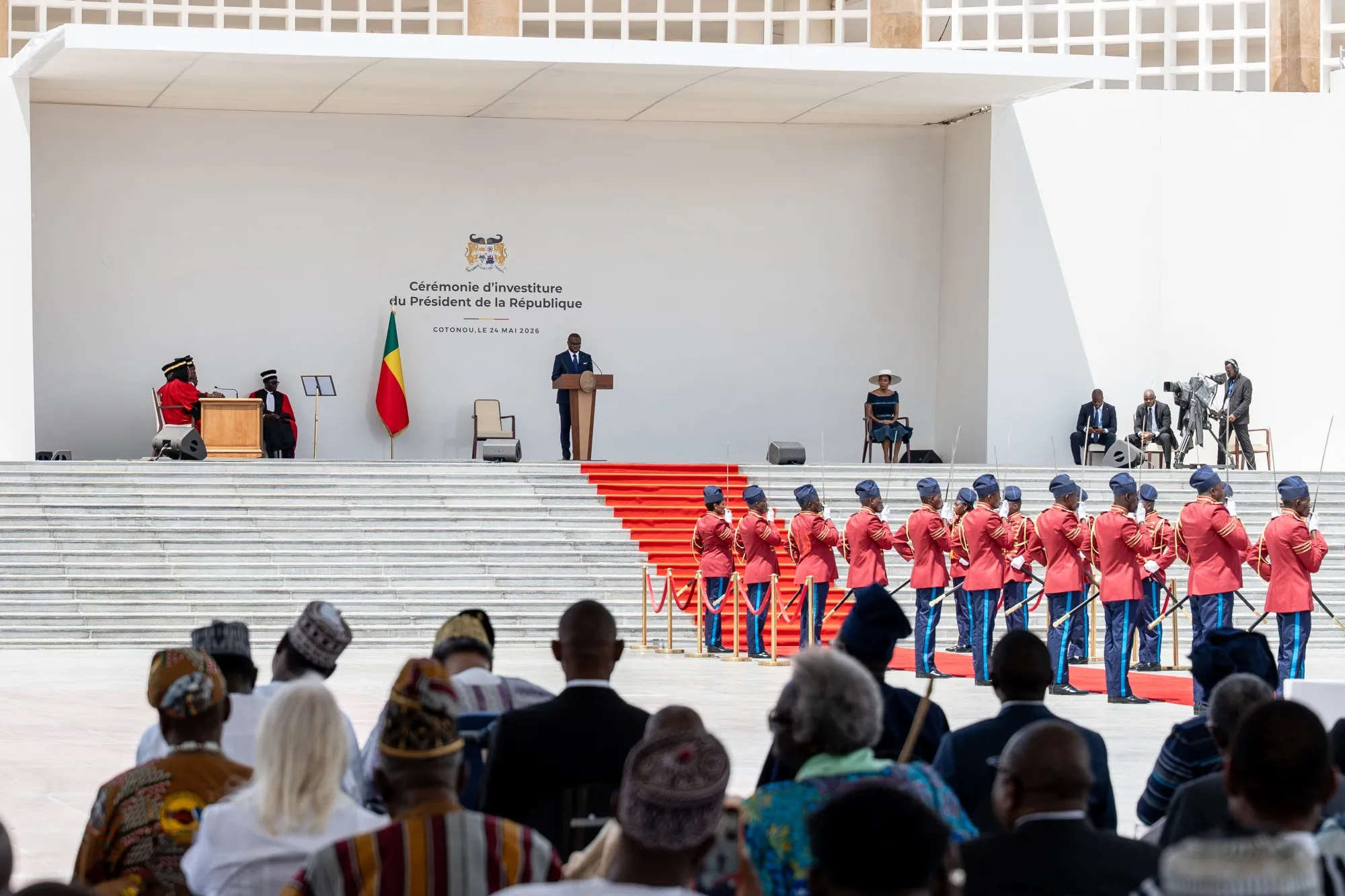
Romuald Wadagni was sworn in as Benin’s new president on Sunday, following an election characterized by the exclusion of major opposition candidates. The inauguration took place at the Palais des Congrès in Cotonou, a significant venue for national events. Wadagni assumed office after a presidential contest where several prominent opposition figures were barred from participating, leading to a largely uncontested path to the presidency. His ascension to the highest office marks a key moment for the West African nation, with expectations of continued policy direction.
Presidential Election Details
Romuald Wadagni secured an overwhelming 94% of the vote in the election held last month, according to official results. This high percentage of votes for Wadagni was notably achieved following the exclusion of several prominent opposition candidates from the ballot. Opposition parties and international observers raised concerns regarding the fairness and inclusivity of the electoral process leading up to the vote, pointing to the absence of key political rivals. Despite these concerns, the government maintained that all procedures were conducted strictly in accordance with Beninese law, ensuring the legality of the electoral framework. Wadagni's victory marked his first term as president, having previously served with distinction as the Minister of Economy and Finance. The electoral commission announced the final results shortly after the polls closed, confirming Wadagni's landslide win and the official mandate he received from the electorate. The election process was monitored by local and some international organizations, which consistently noted the absence of key opposition figures, influencing the overall perception of the electoral outcome.
Background and Policy Continuity
Romuald Wadagni, who served as finance minister for an extended period, has been widely identified as a key architect of Benin’s economic reforms. His previous role involved meticulously shaping the country's financial policies and economic development strategies, earning him a reputation as a skilled economic manager. The ruling coalition, which robustly supported Wadagni's presidential bid, has maintained power for the past decade, establishing a firm grip on the country's political landscape. This long tenure has allowed for the implementation of consistent policy directions across various sectors, from economic development to social programs, creating a predictable governance environment. The recent election is widely viewed as a consolidation of the country’s existing policy trajectory, which has been firmly in place for the last ten years under the current governing alignment. Wadagni's background suggests a strong continuation of the economic strategies he helped develop as finance minister, promising stability and adherence to established development plans. This continuity is expected to reassure investors and maintain the country's economic momentum.
Inauguration Ceremony
The inauguration ceremony for Romuald Wadagni was held at the Palais des Congres in Cotonou, a grand event attended by numerous dignitaries. The event marked the formal beginning of his presidential term after an election where he secured 94% of the vote, cementing his position as the nation's leader. Dignitaries and officials from various sectors gathered in the capital to witness the swearing-in, showing the significance of the occasion. Wadagni previously held the influential position of Minister of Economy and Finance, playing a significant and instrumental role in the country's economic policies over the past decade. His ascension to the presidency is widely expected to maintain the policy continuity established by the ruling coalition, ensuring a steady hand at the helm of the government. Local and international observers noted the exclusion of several prominent opposition candidates from the electoral process leading up to the ceremony, a point of contention during the election cycle. Despite these observations, the government reiterated its stance that all electoral procedures were conducted in strict accordance with Beninese law, affirming the legitimacy of the process.