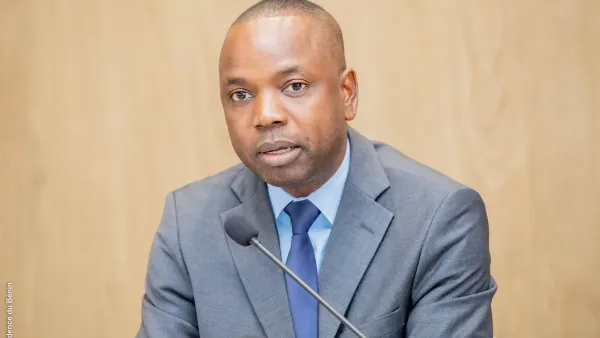
The 2026-2027 school year in Benin is scheduled to commence on Monday, September 14, 2026. This official start date marks a significant moment for the nation's educational system. This launch follows a national campaign for the free distribution of school kits, which began on September 8, 2026. The distribution initiative was launched in Touncountouna, located in the Atacora region. Armand Kuyema Natta serves as the Minister of Maternal and Primary Education, overseeing these key preparatory and inaugural activities. The Ministry has been instrumental in coordinating the various efforts leading up to the new academic year, ensuring a smooth transition for students and educators alike.
Boosting Academic Performance
The National Education Council has formulated fifteen recommendations for the 2026-2027 school year, aimed at enhancing academic performance. These recommendations are expected to guide educational practices and standards throughout the upcoming academic period, providing a clear framework for improvement. A key structural detail for the year involves the first trimester, which is scheduled to extend until December 18, 2026. This timeframe provides a defined period for initial learning and assessment within the school calendar, allowing for focused instruction and evaluation. The emphasis on rigorous standards follows the 2025-2026 school year, which saw a BEPC (Brevet d'Études du Premier Cycle) success rate of 64.14%. This figure represents the performance of students in the middle school leaving examination, providing a benchmark for future academic goals. The formulated recommendations are intended to build upon these results and contribute to further improvements in student outcomes across Benin's educational system, striving for higher achievement levels in subsequent examinations. The commitment to academic excellence shows the government's vision for a well-educated populace.
Financial Support for Families
The government of Benin has announced the generalization of free tuition fees for girls enrolled in public general and technical secondary education, effective from the current school year. This measure aims to alleviate financial burdens on families and encourage female enrollment in higher education levels, promoting gender equity in access to schooling. This significant policy change is expected to have a broad impact, particularly in regions where economic constraints might otherwise hinder girls' educational pursuits. It shows a broader commitment to making education accessible to all segments of the population.
The government's commitment to educational accessibility is further demonstrated through its free school kit distribution campaign. This initiative, now in its eighth edition, represents an investment of 752,393,674 FCFA. Through this program, 145,580 students are expected to receive essential school supplies, supporting their educational journey and reducing costs for households across the country. This substantial financial commitment notes the government's dedication to removing barriers to education, ensuring that students have the necessary resources to succeed from the very beginning of the school year. The distribution of these kits is a tangible expression of support for families and students nationwide.
Looking Ahead
A pre-school year week was implemented from September 7 to September 11, 2026, allowing for final adjustments before the official start of classes. This preparatory period aimed to ensure all logistical and pedagogical elements were in place for the new academic term, facilitating a smooth and organized commencement of learning. The upcoming school year will build on recent academic outcomes, with a clear focus on maintaining and improving performance across all educational levels. In the 2025-2026 school year, the Baccalauréat examination recorded a success rate of 66.78%. This figure reflects the performance of students completing secondary education and serves as an important indicator of the system's effectiveness. Additionally, the Certificat d'Études Primaires (CEP) saw a success rate of 90.17% for the same academic year, demonstrating strong foundational learning. These results provide a baseline as the education system prepares for the 2026-2027 school year, with an emphasis on maintaining and improving student achievements across all levels, from primary to secondary education. The full approach, combining academic rigor with financial relief, sets a promising tone for the new academic year in Benin.