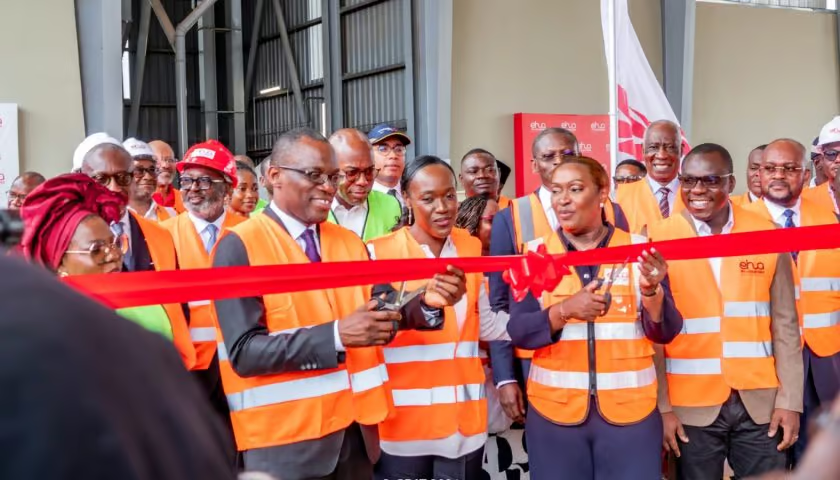
The Customs administrations of Nigeria and Benin Republic conducted a joint assessment of the One-Stop Border Post on Friday, aiming to streamline operations and enhance trade harmonization between the two West African nations. The evaluation occurred at the Seme Krake border town, a critical entry point connecting Nigeria and Benin Republic. This collaborative effort signifies a move towards improved customs procedures and reduced bottlenecks for goods and people traversing the shared border. Officials from both countries participated in the assessment, focusing on the efficiency and effectiveness of the existing border post infrastructure and processes. The joint review is expected to identify areas for operational improvements and facilitate smoother cross-border economic activities, ultimately contributing to deeper regional economic integration.
Strategic Border Location and Trade Volume
The Sèmè–Kraké (Seme Krake) border post is strategically located on the Abidjan–Lagos Corridor, a vital economic artery for West Africa. This corridor is responsible for approximately 70 percent of the entire sub-region’s transit trade, showing its immense significance for regional commerce and economic development. The Seme Krake border operates continuously, remaining open around the clock every day of the year, facilitating constant movement of goods and people between Nigeria and Benin Republic. Its strategic position and continuous operation highlight its role as a key gateway for economic activities and regional integration within the African continent. The joint assessment by Nigerian and Beninese customs aims to further enhance the efficiency of this critical trade route, which serves as a major conduit for merchandise and human traffic. The continuous operation of the border post ensures that trade flows are not interrupted, supporting the dynamic economic relationship between the two nations and the broader West African region.
Current Operational Challenges
The customs administrations of Nigeria and Benin Republic currently operate under a shared physical infrastructure at the Seme Krake border but do not utilize a unified digital system. This operational setup precludes a smooth, real-time exchange of critical data, including declarations, manifests, transit information, risk profiles, or enforcement alerts between the two entities. The absence of a single integrated system introduces inefficiencies and potential delays in processing cross-border trade and movement. This lack of interoperability can lead to duplication of efforts, increased processing times, and potential vulnerabilities in security and revenue collection. To address these challenges, efforts are presently focused on establishing an interconnection between the two administrations. This initiative involves developing a common data exchange arrangement aimed at facilitating smoother and more efficient communication and data sharing. The proposed system is intended to streamline customs procedures and enhance operational coordination at the vital Seme Krake border crossing, thereby improving overall trade facilitation and security. Work is specifically under way on the interconnection of the two administrations through a common data exchange arrangement, signifying a concrete step towards overcoming these existing digital divides.
Quotes from Leadership
The joint assessment at the Seme Krake border is integral to ongoing efforts aimed at deepening regional economic integration between Nigeria and Benin Republic. This assessment is specifically part of a broader initiative to harmonise cross-border procedures, reduce trade barriers, and facilitate the smooth movement of legitimate goods and services between both countries. Officials are working to harmonize cross-border procedures, intending to reduce trade barriers and facilitate the smooth movement of legitimate goods and services between the two nations. This initiative seeks to streamline operations and enhance efficiency at the vital border crossing. The collaborative approach shows a commitment to fostering a more integrated economic environment in West Africa, promoting stability and growth across the region. The emphasis on legitimate goods and services notes the dual goal of facilitating trade while also ensuring regulatory compliance and security.
The focus on trade harmonization is particularly relevant given the significant economic ties between Nigeria and Benin. Approximately 22 percent of Benin’s informal exports are destined for Nigeria, noting the substantial volume of trade flowing between the two countries, including transactions that occur outside formal channels. Enhancing official procedures is expected to support both formal and informal trade, ensuring smoother operations for all economic actors. This recognition of informal trade's importance shows the need for policies that benefit all segments of the trading community.
Impact on Informal Trade
Informal trade is estimated to constitute a fifth of Nigeria's economic activity, with an even higher proportion in Benin. This means that a substantial portion of economic transactions and livelihoods depends on these less formal channels. Across the African continent, women comprise over 70 percent of individuals engaged in informal cross-border trade, making them a particularly significant demographic affected by border policies and trade harmonization efforts. These figures show the significant role of informal economic activities and the demographic most affected by border policies and trade harmonization efforts. The joint assessment at the Seme Krake border aims to improve the overall trade environment, which could, in turn, influence the dynamics of this substantial informal sector by providing more predictable and efficient processes. By improving the efficiency and transparency of border operations, the initiative seeks to create a more supportive environment for these traders, potentially reducing the challenges they face and promoting more equitable economic participation.