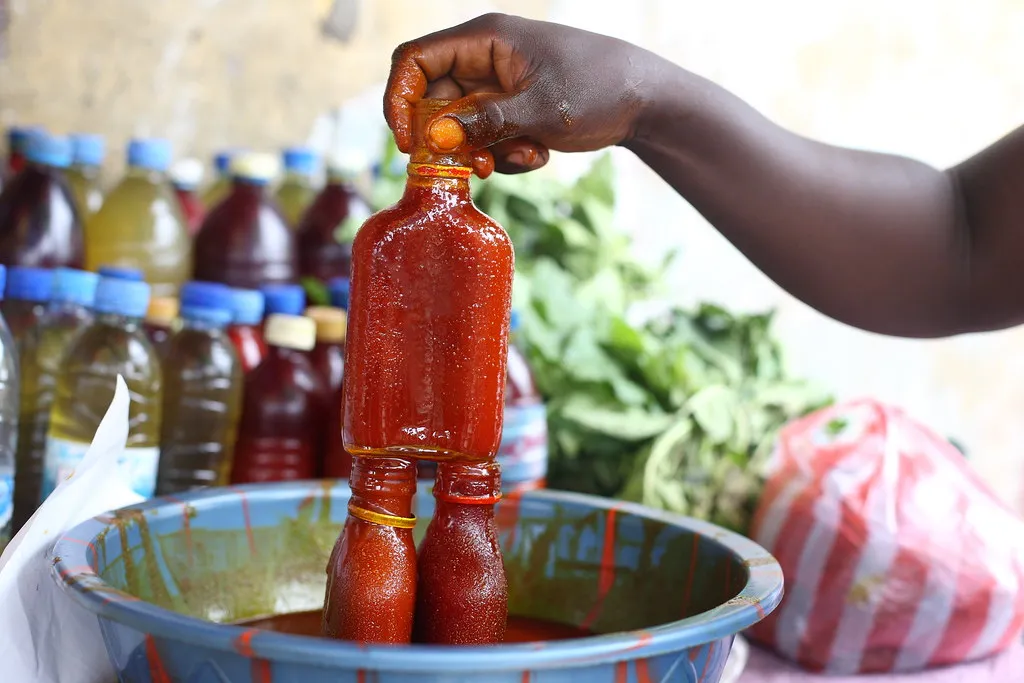
A recent News Agency of Nigeria (NAN) survey found that palm oil prices in Benin City, Edo State, have experienced a fragile decline. The survey, conducted this week across Oba Market, New Benin Market, and Uselu Market, observed slight price reductions for the commodity. This development follows previous reports of fluctuating palm oil costs in the region, which have been a source of considerable concern for local residents. Consumers and traders in the South-south state have been closely monitoring price movements for staple goods like palm oil, which remains a significant component of local diets and trade. The findings suggest a potential, albeit uncertain, shift in market dynamics for palm oil, offering a momentary respite to consumers.
Market Price Dynamics
Palm oil litre prices have recently decreased from a range of N1,500 to N1,600 to approximately N1,200 and N1,300 across several trading outlets in Benin City, Edo State. This reduction reflects a shift in market dynamics for the commodity, which had seen previous fluctuations and upward trends. This notable decline in per-litre prices was observed across the various markets surveyed by the News Agency of Nigeria, providing a clearer picture of the current market situation. Despite this decline, the current price changes have been deemed insufficient to significantly alleviate the worsening economic hardship faced by numerous households, particularly low-income earners. Many families are still struggling to afford essential foodstuffs, even with these minor adjustments. The new price points, while lower than recent peaks, still present challenges for many consumers striving to manage their daily expenditures on essential goods, noting the persistent economic pressures in the region.
Factors Influencing Prices
The temporary reduction in palm oil prices is attributed to increased supplies from producing communities across Nigeria's South-south and South-east regions. This influx of product into the markets has helped to ease some of the supply-side pressures that previously drove prices higher. Improved fuel availability has also contributed to this trend by slightly reducing transportation expenses for the commodity, making it more cost-effective for traders to bring palm oil to market. This combination of factors, specifically the enhanced supply alongside more manageable logistics costs, has allowed for a greater volume of palm oil to reach markets in Benin City, influencing the recent price adjustments. This temporary relief, however, is viewed with caution by market participants, who are aware of the volatile nature of commodity prices.
Residents and market leaders have called on authorities to implement measures to sustain these declining prices. Their recommendations include improving rural infrastructure, which would facilitate easier and cheaper movement of goods from farms to markets. They also urged strengthening local palm production capabilities, thereby increasing domestic supply and reducing reliance on potentially erratic external sources. Stabilizing transportation expenses through consistent fuel availability and better road networks is seen as key. Such actions are viewed as essential to ensuring that the current price decreases are not merely temporary and can lead to more lasting relief for consumers, fostering greater economic stability for households.
Calls for Stability
Consumers and traders characterized the recent price reductions as "a fragile relief." Despite the current downtick, market participants express concern over the sustainability of these lower prices, fearing that the current positive trend could be short-lived. Unstable supplies from producing regions remain a significant factor contributing to price volatility, as fluctuations in harvest or distribution can quickly impact availability. Transportation expenses continue to exert upward pressure on commodity costs, impacting overall market stability, especially if fuel prices become erratic again. Persistent inflationary pressures across the broader economy also pose a risk, potentially triggering another increase in palm oil prices in the near future, reversing any gains made. The market faces several challenges that could easily reverse the current trend, showing the need for sustained intervention and strategic planning to ensure long-term price stability for this vital commodity.