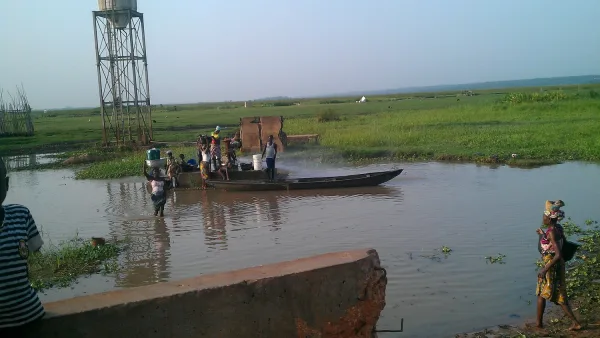
Rising waters from the Ouémé River have inundated multiple communities in southern Benin, causing significant disruption to local infrastructure and daily life in the areas of Gangban, Togbota, Dannou, and Gogbo. Local authorities are managing the impact of the flooding as water levels continue to affect residential access and public services across these settlements. The Ouémé River flood has affected the areas of Gangban, Togbota, Dannou, and Gogbo in southern Benin.
The expansion of the Ouémé River has created a complex situation for regional administrators tasked with maintaining public safety. As the water continues to rise, the physical geography of the low-lying settlements has shifted, creating challenges for the movement of residents who rely on local roads and pathways to conduct their daily activities. The inundation has specifically targeted the residential sectors of these four distinct areas, forcing a reconfiguration of how public services are delivered to those trapped by the overflow.
Educational activities have come to a halt in Dannou, where officials suspended classes at the public primary school. The decision to close the facility follows the encroachment of floodwaters, which rendered the school grounds inaccessible and prompted concerns regarding student safety during the ongoing environmental event. Classes have been suspended at the public primary school in Dannou due to the flooding. The suspension of academic activities is intended to prevent students from navigating potentially hazardous routes to reach the school campus while the river remains at an elevated level.
Sébastien Akiti, the head of the Gangban district, conducted an inspection of the affected regions to assess the extent of the damage. During his visit to the flooded sites, he issued a formal warning to local residents, advising them to remain vigilant and avoid proximity to electrical installations that may have been compromised by the rising water. Sébastien Akiti, the head of the Gangban district, visited the affected areas and warned residents to remain vigilant around electrical installations.
This inspection served as a primary method for the district leadership to gather firsthand data on the severity of the flooding. By traveling through the inundated zones, Sébastien Akiti was able to observe the direct impact on the infrastructure of Gangban. The warning issued to the residents emphasizes the risk posed by the interaction between the floodwaters and the electrical grid. As the water makes contact with power lines and distribution points, the potential for electrical accidents increases, necessitating strict caution from the public. The focus of the local government remains on mitigating these risks while the Ouémé River continues to pose a threat to the stability of the affected communities. Residents are being encouraged to monitor the situation closely as the authorities continue to evaluate the long-term impact on the infrastructure within Gangban, Togbota, Dannou, and Gogbo. The coordination between local officials and community members is currently the primary mechanism for managing the ongoing environmental event in southern Benin.