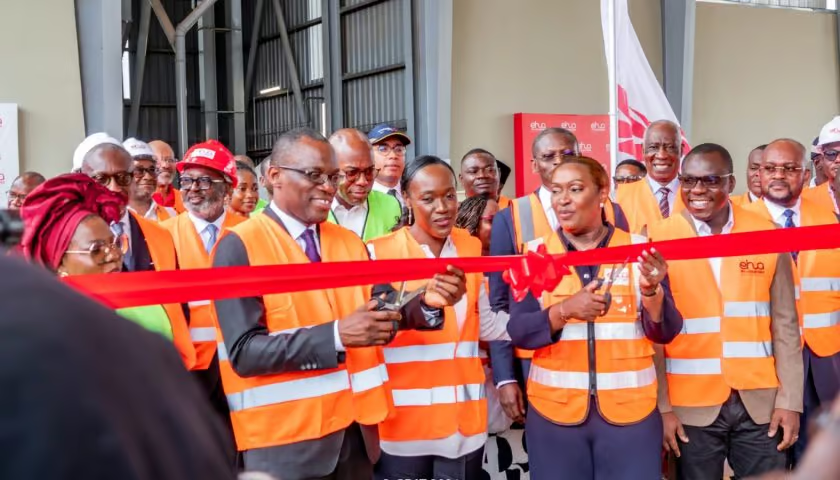
Nigeria and Benin Republic are implementing a real-time data exchange system to enhance trade facilitation at their shared Seme Border and Kraké crossing points. The new arrangement allows for the smooth sharing of critical information, including declarations, manifests, transit details, risk profiles, and enforcement alerts between the two nations. This initiative aims to streamline cross-border operations and improve efficiency along the Abidjan–Lagos Corridor, a vital trade route in West Africa. The integration is expected to bolster regional economic cooperation and address logistical challenges faced by traders. The establishment of this real-time data exchange arrangement between Nigeria and Benin Republic is a significant step towards modernizing border management and fostering a more efficient trade environment. This collaborative effort shows a commitment from both nations to leverage technology for economic growth and regional stability.
Strategic Border Hub
The Sèmè–Kraké border crossing holds strategic importance as a key point along the Abidjan–Lagos Corridor, a critical artery for trade and movement across West Africa. This particular crossing is one of the busiest land borders in the region, facilitating substantial commercial and human traffic between Nigeria and Benin Republic. Operations at the Sèmè–Kraké border are continuous, running around the clock every day of the year to accommodate the high volume of cross-border activities. Its constant activity shows its role as a vital nexus for regional commerce and integration within the broader West African economic landscape. The Sèmè–Kraké border is not merely a geographical demarcation but a dynamic hub where economic activities converge, making its efficient management critical for regional prosperity. Its strategic location on the Abidjan–Lagos Corridor positions it as a critical gateway for goods and services moving across multiple West African countries.
Bridging Systems and Trade Gaps
The initiative aims to deepen trade integration, reduce border delays, and facilitate the movement of legitimate goods and services between Nigeria and Benin Republic. This effort is designed to streamline operations and enhance efficiency at the Seme-Kraké border. The joint assessment between the two nations forms part of broader efforts to deepen regional economic integration within West Africa. These initiatives seek to harmonize cross-border procedures, reduce existing trade barriers, and facilitate legitimate trade flows between the countries, thereby improving the overall trade environment. By establishing a unified approach to data management and information sharing, the two nations are working to dismantle logistical hurdles that have historically impeded trade. This harmonization of procedures is expected to create a more predictable and transparent trading landscape, benefiting both large enterprises and small-scale traders. The commitment to reducing trade barriers through this data exchange system reflects a forward-looking strategy for economic cooperation.
Impact on Regional Trade and Traders
Informal cross-border trade, particularly relevant to the new data exchange system, sees women constituting over 70 percent of its participants across Africa. This demographic plays a significant role in the daily economic activities between Nigeria and Benin. The improved efficiency at the Seme-Kraké border is anticipated to directly impact these traders, many of whom rely on swift and unimpeded movement of goods for their livelihoods. By streamlining processes, the new system aims to reduce uncertainties and delays that often affect informal traders, potentially encouraging a transition towards more formalized trade practices.
Statistics indicate that approximately 22 percent of Benin’s informal exports are transported to Nigeria via the Nigeria-Benin corridor. This substantial volume notes the economic interdependence between the two nations and the direct implications of streamlined border operations on trade flows. The real-time data exchange aims to facilitate these established trade routes, enhancing legitimate commercial exchanges. The formalization and efficiency gains from this system are expected to provide a more secure and predictable environment for these significant trade volumes, supporting economic stability and growth for both countries.
Customs Officials' Perspectives
The Abidjan–Lagos Corridor carries approximately 70 per cent of the sub-region’s transit trade, showing its economic significance. This trade route is central to the movement of goods across West Africa, connecting major economic centers and facilitating regional commerce. Informal trade is estimated to account for a fifth of economic activity in Nigeria. In Benin, this share is considerably higher, indicating the widespread role of informal commerce in its economy. The new data exchange system aims to integrate these vital economic activities within a more formalized and efficient framework. By providing real-time visibility into declarations and manifests, customs officials will be better equipped to differentiate between legitimate trade and illicit activities, thereby enhancing security and revenue collection. This integration is key for fostering an environment where legitimate businesses can thrive while maintaining necessary controls. The system’s ability to share risk profiles and enforcement alerts smoothly will also empower customs authorities to make more informed decisions, reducing processing times for compliant traders and allowing for more targeted interventions.