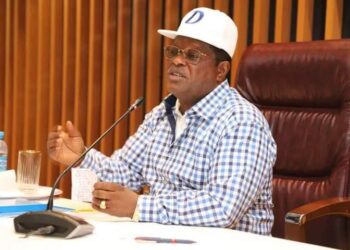
Minister of Works, David Umahi, has publicly criticized the Benin-Asaba Expressway Concession Company (BAECC) regarding its management of the Benin-Asaba highway. The minister’s concerns stem from the company's approach to road rehabilitation, specifically citing practices that he claims have exacerbated the highway's poor condition. Mr. Umahi expressed anger over BAECC's decision to remove existing asphalt from the road surface without first establishing adequate side drains. This sequence of operations, according to the Minister, directly contributed to the accelerated deterioration of the highway, showing his dissatisfaction with the concessionaire's operational methodology. The Minister's strong words noted a significant breach of expected engineering standards and contractual obligations, leading to widespread public concern over the vital transportation artery. He emphasized that the concessionaire's actions had not only failed to improve the road but had actively worsened its state, making travel more difficult and hazardous for commuters.
Accusations of Incompetence and Unauthorized Work
Minister of Works David Umahi accused the Benin-Asaba Expressway Concession Company (BAECC) of lacking the necessary technical competence to manage a major highway project. This accusation was a central point of his criticism, suggesting that BAECC's operational decisions demonstrated a fundamental misunderstanding of road construction and maintenance principles. Mr. Umahi stated the concessionaire would have faced arrest for allegedly destroying public property, given the extent of the damage to the road. This strong statement showed the gravity of the situation as perceived by the Ministry of Works, indicating that BAECC’s actions were not merely negligent but potentially criminal in their impact on public infrastructure. The Minister further asserted that the Ministry of Works had not authorized the removal of asphalt from the existing road surface. This lack of authorization was presented as a critical procedural failing, noting a disregard for established regulatory processes and oversight mechanisms designed to ensure project integrity and public safety.
Umahi emphasized that the concessionaire's actions demonstrated a significant lapse in professional standards for such an undertaking. He reiterated that the absence of proper authorization for the asphalt removal indicated a disregard for established procedures and guidelines. The Minister's remarks noted a breakdown in the expected operational protocols between the concessionaire and the Ministry, raising questions about the supervision and execution of the project. He stressed that any major intervention on a federal highway, particularly one involving the removal of existing infrastructure, requires explicit approval and a clear methodology to prevent further degradation. The Minister's stern warning served as a clear message about the government's intolerance for substandard work and unauthorized operations on critical national assets.
Project Background and Concessionaire's Defense
The Benin-Asaba highway was concessioned to the Benin-Asaba Expressway Concession Company (BAECC) in 2025, with plans to transform it into a 10-lane expressway. This ambitious project aimed to significantly upgrade the capacity and efficiency of the key route, which connects major economic hubs and facilitates interstate commerce. BAECC had provided assurances in October 2025 that the project would be completed within the agreed timeframe. These assurances were given with the expectation that the concessionaire possessed the expertise and resources to deliver on its commitments. However, Samuel Daramola, Chief Executive Officer of BAECC, attributed the slow pace of work to challenges posed by heavy rainfall and the substantial volume of traffic on the route. Daramola maintained that BAECC remained committed to completing the project and was financing its execution under the terms of the concession agreement. He acknowledged the difficulties but emphasized the company's dedication to overcoming them and delivering the promised infrastructure improvement.
Despite the Minister's strong criticisms, Daramola's defense noted the operational complexities inherent in such a large-scale project, particularly concerning environmental factors and managing an active highway. He pointed to the persistent heavy rainfall as a significant impediment, causing delays in earthworks and asphalt laying, which are highly sensitive to weather conditions. The substantial volume of traffic on the Benin-Asaba route also presented a continuous challenge, requiring careful traffic management plans and often limiting the windows available for construction activities. Daramola reiterated BAECC's financial commitment, stressing that the company was funding the project as per the concession terms, indicating a continued investment despite the setbacks. This financial backing, he suggested, demonstrated the company's long-term dedication to the highway's transformation into a modern, multi-lane expressway.
Government's Future Plans and Local Support
Minister of Works, David Umahi, expressed his displeasure on Tuesday during an on-the-spot assessment of the road in Benin City, Edo state. This direct inspection showed the federal government's serious concern over the condition of the highway and the performance of the concessionaire. President Bola Ahmed Tinubu has directed the redesign of key road infrastructure, including routes from Kogi through Edo to Warri, with the potential implementation of concrete pavement for enhanced durability. This directive signals a strategic shift towards more strong and long-lasting road construction materials, aiming to prevent future rapid deterioration seen with asphalt. During the assessment in Benin City, Governor Monday Okpebholo was present, indicating local government involvement and support for addressing the road’s condition. The Governor's presence noted the collaborative efforts between federal and state authorities to resolve the pressing infrastructure issues affecting the region.
The Minister’s visit showed the government’s focus on the critical transportation corridor, recognizing its importance for economic development and regional connectivity. The proposed redesign and material change reflect a strategic shift in addressing the long-term viability of the affected highways, moving away from conventional asphalt in favor of more resilient concrete solutions. This approach is intended to provide a more sustainable infrastructure that can withstand heavy traffic loads and challenging environmental conditions for decades. The government's commitment to these vital routes, from Kogi through Edo to Warri, is seen as a key step towards improving national transportation networks and ensuring the safety and efficiency of travel across these key regions.