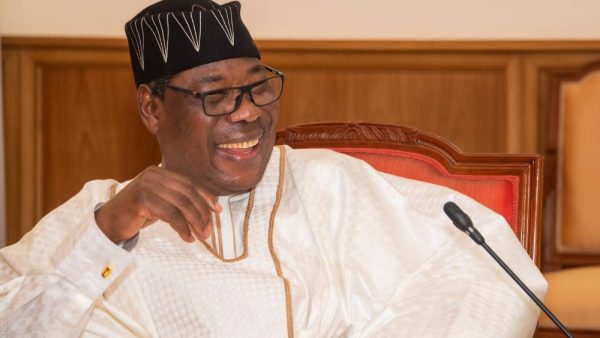
Former Beninese President Boni Yayi, who previously opposed the creation of the Senate during the constitutional revision process, is now expected to join the body following its establishment as a constitutional institution. This marks a significant change in stance for the former head of state. Eugène Azatassou, vice president of the Les Démocrates party, indicated this shift, noting the Senate's new status and providing an explanation for Boni Yayi's evolving position. Mr. Azatassou stated, "I shared the same viewpoint as President Boni Yayi, who expressed his disagreement with the establishment of this institution."
Boni Yayi had earlier argued that the Senate would impose an additional burden on public finances without addressing the country's priorities. His concerns at the time centered on the perceived financial strain a new legislative chamber would place on the national budget, questioning its necessity in light of other pressing national needs. However, Mr. Azatassou explained the reasoning behind the change in stance, emphasizing the institution's formal integration into the national governance structure. "Now that the institution has been established, it has become a part of the Republic," he said, adding, "As soon as it is a part of the Republic, I believe there is no reason for President Boni Yayi, being a member by right, not to sit." This notes the Senate's new constitutional nature as a primary reason for Boni Yayi's shift.
Senate's New Constitutional Framework
The new Constitution of Benin designates former presidents of the Republic, former presidents of the National Assembly, and former presidents of the Constitutional Court as members by right of the Senate. This constitutional shift formalizes their inclusion in the legislative body without the need for election or appointment. The Senate itself was established through a full constitutional revision that was adopted in November 2025. This significant amendment to the nation's foundational document was subsequently enacted on December 17, 2025, officially bringing the new institution into existence and solidifying its place within Benin's governmental structure. The establishment of the Senate as a fully recognized and functioning part of the Republic is central to the understanding of the evolving positions of political figures like Boni Yayi.
Regarding the financial aspects of the new senatorial roles, the Constitution delegates the responsibility of setting senator remuneration to a decree. This decree is to be issued by the Council of Ministers, outlining the specific salaries, allowances, and benefits for all members of the Senate. However, the government has not yet published this decree. The absence of the decree means the exact financial provisions for senators, including former presidents who are members by right, remain undefined at this time. This uncertainty extends to how their current benefits as former heads of state might interact with or be supplemented by senatorial remuneration. While the constitutional framework establishes the roles and the mechanism for remuneration, the executive branch's action is still pending to finalize these key financial details, leaving the remuneration of senators currently unknown.
Yayi's Evolving Stance Explained
Boni Yayi, Benin's former president, is now expected to join the newly established Senate institution, marking a significant shift from his previous opposition. Eugène Azatassou, vice president of the Les Démocrates party, provided an explanation for this change in Boni Yayi's stance regarding the Senate. Mr. Azatassou acknowledged his prior agreement with the former president's initial concerns, stating, "I shared the same viewpoint as President Boni Yayi, who expressed his disagreement with the establishment of this institution." Boni Yayi's initial opposition was rooted in his belief that the Senate would constitute an additional burden on public finances, diverting resources from more pressing national priorities. His concern was that the new institution might not contribute effectively to the country's development while adding to the state's expenditure.
The primary reason for Boni Yayi's evolving position stems from his status as a member by right of the new legislative body. With the Senate now formally established and legally constituted, it holds a recognized and undeniable place within the nation's governmental structure. "Now that the institution has been established, it has become a part of the Republic," Mr. Azatassou explained, showing the irreversible nature of its creation. He elaborated on the implications of this institutionalization for Boni Yayi's involvement, adding, "As soon as it is a part of the Republic, I believe there is no reason for President Boni Yayi, being a member by right, not to sit." This indicates that the former head of state's status as a member by right is a compelling reason for his change of position, as he is constitutionally obliged or expected to fulfill this role once the institution is a legal reality.
The Senate's establishment follows a constitutional revision adopted in November 2025 and enacted on December 17, 2025. This revision specifically designates former presidents of the Republic, the National Assembly, and the Constitutional Court as members by right, ensuring their automatic inclusion in the new chamber. Despite the clarity on membership, the remuneration of senators, including former presidents, remains undetermined. A decree from the Council of Ministers is constitutionally required to set salaries and benefits, but the government has not yet published this decree. This means the financial aspects of these senatorial roles are currently unknown, adding a layer of ambiguity to the practical implications of membership for all senators.
Inaugural Session Preparations
The inaugural session of Benin's new upper chamber of Parliament is scheduled for July 30. This initial gathering will take place at the historic Palace of Governors in Porto-Novo, marking the official commencement of the Senate's activities and setting the stage for its legislative work. The newly formed legislative body is composed of at least 25 members, a structure designed to include both individuals designated as members by right, such as former presidents, and others who are appointed to ensure broad representation. This composition reflects a blend of institutional continuity and new political appointments.
Nicéphore Soglo, as the oldest member of the Senate, will initiate the inaugural session, presiding over the proceedings until a permanent leadership is established through internal elections or consensus. This procedural step reflects established parliamentary traditions for the first sitting of a new legislative assembly, ensuring an orderly start to the chamber's operations. The July 30 date sets the definitive timeline for former presidents, such as Boni Yayi, who are members by right, to take their seats in the institution, formally assuming their new constitutional responsibilities. The commencement of the Senate's work is an anticipated event in Benin's political landscape, signaling a new era of legislative governance.