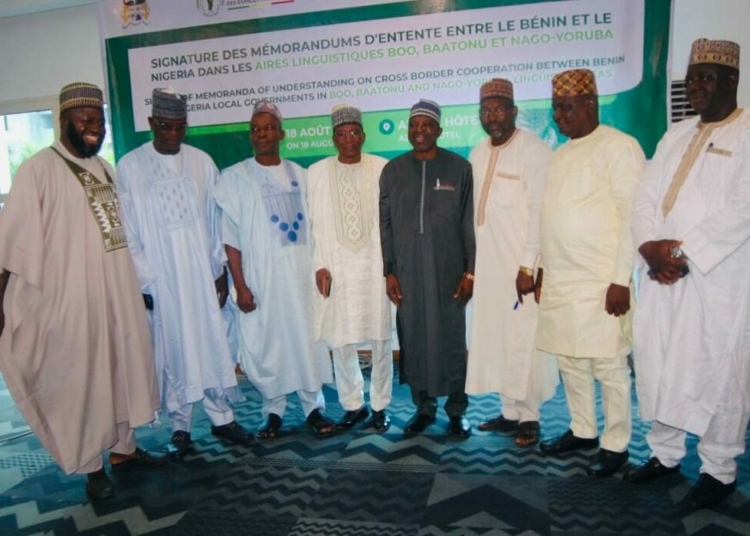
Representatives from Nigeria and Benin gathered in Lagos from 28 to 30 October 2026 for a meeting of the Joint Standing Committee on the Nigeria-Benin International Boundary. Officials convened to discuss cross-border cooperation and administrative management of the shared frontier. The session brought together delegates from the National Boundary Commission and the Benin Agency for Integrated Management of Border Spaces to address technical markers and territorial coordination. Adamu Adaji, Chinwe Udouwem, and Adam Youssoufou participated in the discussions alongside technical support from the German Agency for International Cooperation. The committee evaluated ongoing border projects to ensure alignment between the two nations. Participants concluded the three-day summit by finalizing protocols intended to improve the operational oversight of the common border zone.
Geographic Scope of Border
Nigeria and Benin share approximately 770 kilometres of land boundary. This shared frontier serves as the geographic primary focus for the work of the Joint Standing Committee on the Nigeria-Benin International Boundary. The land boundary between Nigeria and Benin traverses six Nigerian states. Officials from both nations utilize these territorial segments to organize administrative oversight and manage the specific needs of local populations residing along the line.
The National Boundary Commission is currently advocating for the implementation of the Memorandum of Understanding on Local Cross-Border Cooperation. Adamu Adaji, Director-General of the National Boundary Commission, stated: "The management and resolution of boundary issues must be guided by applicable legal instruments, available evidence and technical procedures, while also taking into account the legitimate interests of border communities."
Adamu Adaji further emphasized the potential impact of these policies on regional stability and economic growth. He said: "Translating the agreement into practical action through regular consultations, joint action plans and community-based initiatives would strengthen border security, promote cultural integration, facilitate legitimate cross-border trade and enhance socio-economic development."
The National Boundary Commission intends for these measures to provide a structured framework for the daily administration of the border zones. By formalizing these cooperation efforts, the agency aims to reduce technical disputes and ensure that the administrative management of the frontier remains consistent across the involved Nigerian states. Cooperation between the National Boundary Commission and the Benin Agency for Integrated Management of Border Spaces remains central to the execution of these proposals.