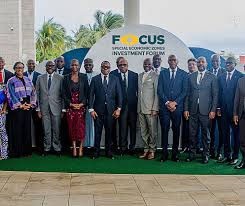
The Special Economic Zones Investment Forum, known as FocusSEZ 2026, took place on 21 and 22 October 2026. Participants gathered at the Sofitel Cotonou Marina Hotel and the Glo-Djigbé Industrial Zone (GDIZ) in Benin to discuss industrial development. Létondji Beheton, Director General of SIPI-BENIN S.A. Addressed the attendees regarding the necessity of economic evolution. "Our ambition can no longer be limited to producing and exporting raw materials," Beheton stated. "We must go further by processing more of these resources on our continent, developing competitive industries, strengthening our value chains and retaining a greater share of the wealth generated from our natural resources." The event centered on these strategic priorities for local resource management and the expansion of industrial capacity within the region.
Partnership Driving Industrial Growth
The Glo-Djigbé Industrial Zone (GDIZ) operates as a partnership between the Government of Benin and ARISE Integrated Industrial Platforms (ARISE IIP). This collaboration serves as a foundation for the industrial infrastructure currently developing within the zone. Arvind Mathur, chief executive officer of PANAFRITEX, noted the broader industrial goals supported by such initiatives. "Africa has significant potential to strengthen its position in the global textile industry," Mathur stated. "Realising this ambition will require the development of integrated industrial capacities that can transform cotton grown on the continent into higher-value-added finished products, while enhancing the competitiveness of the sector and expanding its access to international markets." These integrated capacities remain central to the ongoing operations at the industrial site.
Cotton Processing Success Story
Benin's industrial strategy centers on the expansion of domestic manufacturing for its primary agricultural output. Jean Arsene Yemina, Regional Director of Operations for Francophone West Africa at Afreximbank, identified the textile industry as the engine of this shift. "Here in Benin, the textile industry has become the driving force behind this transformation," Yemina stated. "The Glo-Djigbé Industrial Zone was created through a partnership between the Government of Benin and ARISE IIP, and Afreximbank is proud to have helped finance its establishment."
The Glo-Djigbé Industrial Zone (GDIZ) now spans 1,640 hectares to support these industrial activities. Within this site, Benin Textile (BTEX) operates what Yemina described as "West Africa’s first fully integrated cotton-to-garment manufacturing platform." According to Yemina, the site manages the entire value chain, including ginning, spinning, weaving, and the production of finished garments.
Historical data indicates a significant change in the national processing landscape. Before the creation of the GDIZ, less than 1% of Benin’s cotton was processed locally. That figure has shifted as industrial capacity has scaled. In three years, the zone has processed approximately 40,000 metric tons of cotton. This volume represents nearly 12% of national production. These operations currently support the manufacture of millions of garments branded as "Made in Benin" for international retailers, including US Polo, Kiabi, and H&M.
"The entire value chain, from ginning and spinning to weaving and finished garments, is carried out on African soil by African hands," Yemina said. "Before the creation of the GDIZ, less than 1% of Benin’s cotton was processed locally. In just three years, the zone has come to process approximately 40,000 metric tons of cotton—nearly 12% of national production—and to produce millions of ‘Made in Benin’ garments for major international brands such as US Polo, Kiabi, and H&M."