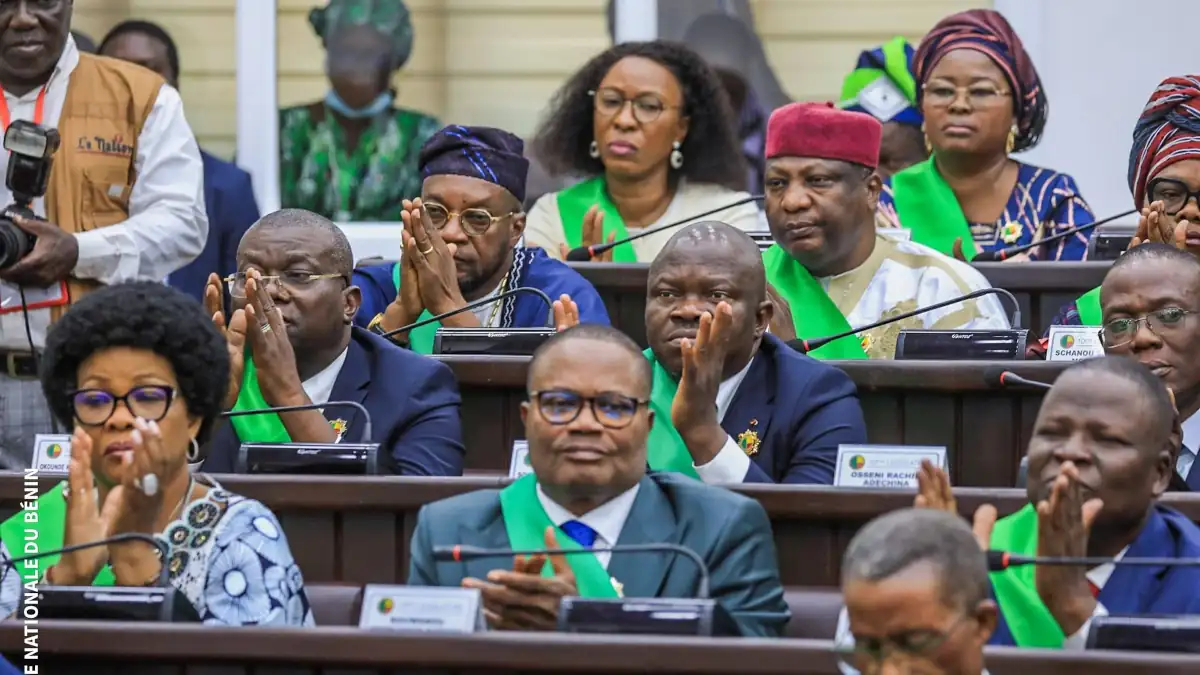
The second ordinary session of the Beninese National Assembly for the year 2026 opened in October 2026. Legislators convened in Porto-Novo to begin the parliamentary period, which serves as the primary forum for reviewing the executive branch's financial proposals. Members of the National Assembly are scheduled to evaluate the 2027 budget plan submitted by President Joseph Djogbénou during these proceedings. This session provides the formal setting for deputies to debate fiscal priorities and government spending allocations for the upcoming calendar year. Officials expect the legislative review process to continue throughout the remaining weeks of the year as the assembly considers the administration's economic objectives for the nation.
Prioritizing Social and Economic Development
The 2027 draft finance law incorporates a 24.3% increase in social-sensitivity expenditure. This allocation aims to address welfare requirements across the country. The government has structured this financial plan to ensure that resources are directed toward the most pressing needs of the population. By prioritizing these specific areas of social spending, the administration seeks to bolster the national safety net.
President Joseph Djogbénou outlined that the 2027 budget focuses on five specific pillars: agriculture, industry, human capital, tourism and culture, and technological innovation. These five pillars form the core of the government's economic roadmap for the next fiscal cycle. To support these objectives, the government plans to construct five zone hospitals. These healthcare facilities are intended to improve medical access and regional infrastructure. Officials also intend to extend the Gbessoké and ARCH programs as part of the broader fiscal strategy. The expansion of these programs is designed to integrate more citizens into the national social protection framework.
Legislators offered varying perspectives on the executive presentation. Member of Parliament Charlemagne Yankoty stated: "Comme vous l’auriez constaté, c’est un discours qui, à la fois, nous interpelle et nous réconforte." The debate within the chamber reflects the diverse priorities held by the representatives as they analyze the fiscal data. Fellow Member of Parliament Cécile S. Ahouménou Hounkpatin added: "C’est un discours très sobre mais responsable et cette responsabilité interpelle toute la conscience d’un député." The legislative body is currently reviewing the technical details of the spending plan to ensure alignment with national development goals.
Member of Parliament Alidjanatou Saliou-Arêkpa shared her reaction to the opening proceedings: "Mon impression est que nous avons eu une belle et fructueuse rentrée parlementaire, avec le discours du président de l’Assemblée nationale qui a éveillé des émotions profondes." As the session progresses, the assembly will continue its examination of the proposed expenditures. The parliamentary process remains the central venue for verifying that the 2027 budget effectively addresses the identified pillars of growth. Deputies are expected to finalize their assessments before the conclusion of the session, ensuring that the financial allocations for agriculture, industry, human capital, tourism and culture, and technological innovation are fully scrutinized. The inclusion of the Gbessoké and ARCH programs, alongside the construction of five zone hospitals, remains a key focus of the ongoing legislative dialogue.