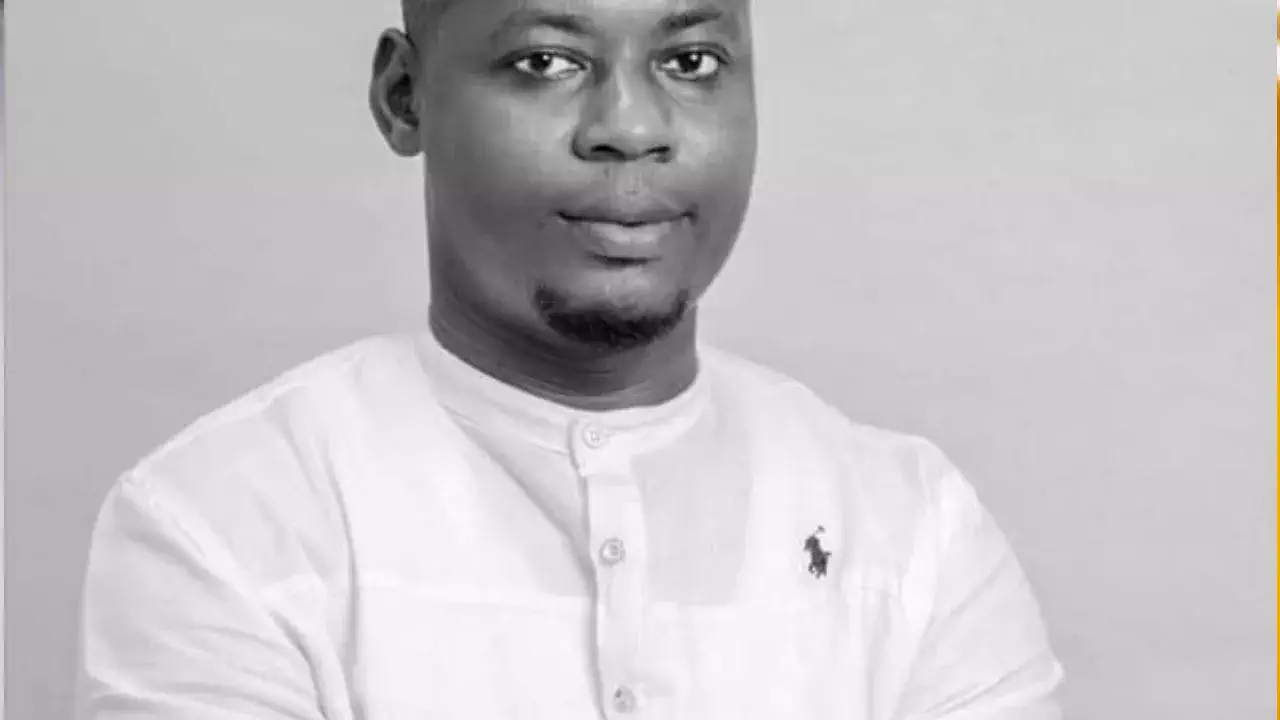
Beninese investigative journalist Hugues Comlan Sossoukpè remains detained without trial in the civil prison of Ouidah following his arrest and rendition from Côte d’Ivoire. Mr. Sossoukpè, a whistleblower, was arrested in Abidjan on July 10, 2025. The journalist was taken into custody by five individuals, two of whom he recognized as agents of the Beninese police. He was subsequently transferred via air, with the aircraft landing at 10 PM in Cotonou. The circumstances of his arrest and transfer have raised concerns among human rights and press freedom organizations. Mr. Sossoukpè's continued detention has drawn international attention to press freedom in Benin and the legal processes employed in his case. His case involves issues of neglected refugee status, suspicions of illegal exfiltration, challenged defense rights, and a referral to the ECOWAS Court of Justice by Reporters Without Borders (RSF).
The Abidjan Arrest and Transfer
Hugues Comlan Sossoukpè traveled from Lomé to Abidjan on an Air Côte d’Ivoire flight on July 8, 2025. He was in Côte d’Ivoire to attend the Ivoire Tech Forum, an event scheduled from July 9-11, 2025, having responded to an official invitation from the Ivorian Ministry of Digital Transition and Digitalization to cover the forum. In the night of July 10 to 11, 2025, several police officers knocked on Mr. Sossoukpè's hotel room door in Abidjan. Reporters Without Borders (RSF) stated that Beninese police officers, dispatched to Côte d’Ivoire, carried out the operation. RSF added that these officers conducted the operation "with complicity from their Ivorian counterparts." According to RSF, "no judicial police officer was present to oversee the arrest or extradition, and no judicial decision authorized it." Mr. Sossoukpè recognized two of the five individuals who took him into custody as agents of the Beninese police, showing the direct involvement of Beninese authorities in the operation.
Following his arrest, Mr. Sossoukpè was placed on a private plane, identified as a Beechcraft 1900D, which then headed to Cotonou. He was transferred to Cotonou, where he arrived on the night of July 10, with the aircraft landing at 10 PM. The day after his arrival, Mr. Sossoukpè was presented to an investigating judge. The judge read him the international arrest warrant that had been issued by the CRIET. On July 14, 2025, Mr. Sossoukpè appeared before the judge for freedoms and detention of the CRIET. This initial presentation to the judge was a critical step in the legal process following his controversial transfer.
No bilateral extradition treaty formally linking Benin and Côte d’Ivoire in this type of context has been satisfactorily invoked regarding the transfer. RSF emphasized that "Beninese police officers, dispatched to Côte d’Ivoire, themselves carried out the operation." This direct intervention by Beninese law enforcement on Ivorian soil, without apparent legal framework, has been a central point of contention for human rights advocates. In March 2025, Olofofo, Mr. Sossoukpè's online media platform, had been prohibited from publishing in Benin by the High Authority of Audiovisual and Communication (HAAC). This ban preceded his arrest by several months, suggesting a pattern of official pressure against his journalistic activities. RSF commented on the situation, stating, "The authorities even go so far as to hunt down critical journalists, like Hugues Comlan Sossoukpè, founder of the online media Olofofo, who was abducted in Côte d’Ivoire before being extradited to Benin."
Legal and Refugee Status Concerns
The case of Hugues Comlan Sossoukpè involves issues of neglected refugee status, suspicions of illegal exfiltration, challenged defense rights, and a referral to the ECOWAS Court of Justice by Reporters Without Borders (RSF). Four charges were retained against him: incitement to rebellion, incitement to hatred and violence, harassment via electronic communication, and apology for terrorism. Mr. Sossoukpè had obtained official political refugee status in Togo in November 2021. His Togolese travel passport explicitly mentioned this refugee status, providing clear documentation of his protected status. The charges against him rely primarily on the Digital Code of Benin, specifically law n°2017-20 of April 20, 2018, which has been criticized for its broad scope and potential for misuse against journalists and dissidents.
The CRIET, an exceptional court created in 2018, is designed to judge economic offenses and terrorist acts. Its jurisdiction over cases involving journalists has raised questions about the politicization of legal proceedings in Benin. Hugues Comlan Sossoukpè claimed Togolese nationality, which was consistent with his refugee status. At the time of his arrest, he was benefiting from political refugee status recognized by the UNHCR, the UN Refugee Agency. The handover of Mr. Sossoukpè to Beninese authorities constitutes a violation of the principle of non-refoulement, according to critics, which prohibits a country from returning a refugee to a place where they would face threats to their life or freedom. RSF commented on the situation, stating, "The authorities even go so far as to hunt down critical journalists, like Hugues Comlan Sossoukpè, founder of the online media Olofofo, who was abducted in Côte d’Ivoire before being extradited to Benin."
RSF also emphasized that "Beninese police officers, dispatched to Côte d’Ivoire, themselves carried out the operation." This assertion directly challenges the legality and international norms surrounding extradition processes. According to the organization, "no judicial police officer was present to oversee the arrest or extradition, and no judicial decision authorized it," further noting the irregular nature of the journalist's transfer. During the first six months of his detention, Mr. Sossoukpè was placed in strict isolation, a measure that human rights organizations often criticize as detrimental to a detainee's well-being and access to legal counsel. A lawyer was able to speak with him for a few minutes at the end of December 2025, indicating the severe restrictions on his defense rights. The spokesperson for the Beninese government, Wilfried Léandre Houngbédji, stated that justice is following its course regarding the journalist's detention, a standard government response to criticisms of judicial processes.
Broader Crackdown and International Response
The broader context of press freedom in Benin has seen a significant deterioration, with Mr. Sossoukpè's case being one of several high-profile incidents. Journalist Pascal Mitowadé was sentenced to five years in prison by a court in March 2026, illustrating the severe penalties faced by media professionals in the country. Prior to this, a hearing set for January 12, 2026, regarding another case, took place without the defense being informed, raising serious concerns about due process and fair trial rights in Benin's judicial system. Another journalist, Ali Moumouni, was arrested in Cotonou on July 16, 2025, just days after Mr. Sossoukpè's transfer. Mr. Moumouni was subsequently placed under detention by the CRIET on July 21, 2025, facing five charges similar to those against Mr. Sossoukpè, suggesting a concerted effort to target critical voices.
The crackdown extended to legal professionals as well. On January 25, 2026, Me Dossou Stanic Adjacotan, one of Mr. Sossoukpè’s lawyers, was arrested at Cotonou’s Cardinal Bernardin Gantin International Airport. This arrest of a defense attorney further intensified concerns about the rule of law and the ability of detained individuals to secure adequate legal representation. In response to these escalating events, Reporters Without Borders (RSF) filed a request with the ECOWAS Court of Justice against Benin and Côte d’Ivoire on April 24, 2026. This legal action at a regional level shows the international community's concern over the situation. RSF denounced the role of Côte d’Ivoire in violating the right to the protection of refugees and press freedom, holding the Ivorian authorities accountable for their alleged complicity in Mr. Sossoukpè's illegal transfer. The organization also denounced Benin as the instigator of the kidnapping operation and the arbitrary detention of both Mr. Sossoukpè and Mr. Moumouni, directly accusing the Beninese government of orchestrating these actions.
RSF stated that "Beninese police officers, dispatched to Côte d’Ivoire, themselves carried out the operation" concerning Mr. Sossoukpè's arrest. This repeated assertion notes the organization's firm belief in the direct involvement of Beninese state actors in the illegal rendition. According to the organization, "no judicial police officer was present to oversee the arrest or extradition, and no judicial decision authorized it," reinforcing the argument that the entire process was extra-legal. RSF further commented on the situation, stating, "The authorities even go so far as to hunt down critical journalists, like Hugues Comlan Sossoukpè, founder of the online media Olofofo, who was abducted in Côte d’Ivoire before being extradited to Benin." This strong language reflects the gravity with which press freedom organizations view the actions of the Beninese authorities.
Benin's standing in press freedom indices has declined significantly, reflecting the worsening environment for journalists. The country was ranked 78th out of 180 in the RSF index in 2016, indicating a relatively free press environment at the time. By 2026, Benin occupied 113th place in the RSF index, marking a substantial loss of 21 places from its 2025 ranking of 92nd. This sharp decline in a single year shows the rapid erosion of press freedoms and the increasing pressure on journalists and media outlets within the country, with cases like that of Hugues Comlan Sossoukpè contributing to this alarming trend. The international community continues to monitor the situation, calling for adherence to international human rights standards and the protection of journalistic freedoms in Benin.