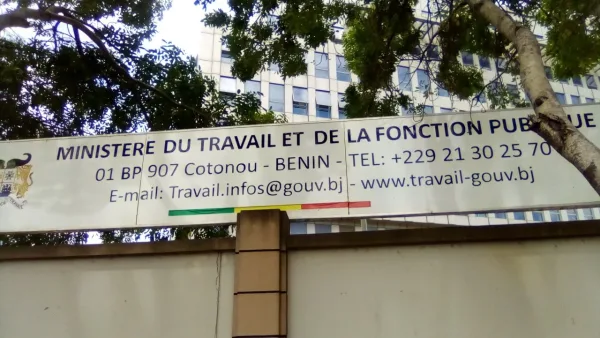
The Ministry of Budget and Civil Service convened a meeting with labor experts on 19 October 2026 in Abomey to address the reorganization of public recruitment processes in Benin. Officials at the session evaluated new strategies to modernize how the state identifies and hires qualified personnel for government roles. This gathering, which focused on the logistical and structural overhaul of hiring, served as a platform for labor experts to share methodologies for talent acquisition.
Government representatives stated that the recruitment initiative aims to attract specialized skills in data science, artificial intelligence, energy transition, and project engineering. These fields represent the core focus areas for the updated hiring framework as the administration attempts to integrate modern technical expertise into the public sector. By prioritizing these specific sectors, the government intends to align its administrative workforce with contemporary technical requirements. The Ministry of Budget and Civil Service noted that the transition toward these high-demand disciplines is essential for the future functionality of state institutions.
The World Bank and the United Nations Development Programme support the recruitment reform workshop. These international organizations are providing resources to assist the Ministry of Budget and Civil Service in implementing the structural changes discussed during the Abomey proceedings. The involvement of the World Bank and the United Nations Development Programme signifies a collaborative approach to modernizing the civil service infrastructure.
During the discussions in Abomey, the Ministry of Budget and Civil Service and the attending labor experts examined the current challenges facing the state in securing professionals with advanced technical backgrounds. The recruitment reform workshop functioned as a forum for stakeholders to detail the specific requirements for candidates in data science and artificial intelligence. Participants at the meeting also reviewed how the energy transition and project engineering sectors require distinct recruitment pathways compared to traditional civil service roles.
The Ministry of Budget and Civil Service emphasized that the support from the World Bank and the United Nations Development Programme is critical for the long-term success of these efforts. The resources provided by these institutions are intended to facilitate the development of new hiring protocols that are both transparent and efficient. By engaging with labor experts, the government hopes to establish a standardized system that effectively identifies and attracts the necessary talent.
As the Ministry of Budget and Civil Service moves forward with these changes, the focus remains on the implementation of the strategies formulated during the 19 October 2026 meeting. The collaboration with the World Bank and the United Nations Development Programme provides a framework for monitoring the progress of these reforms. The government expects that the integration of specialized personnel will bolster the capacity of the public sector to manage complex projects and address technical challenges. The Abomey proceedings concluded with an agreement to continue the dialogue between the Ministry of Budget and Civil Service and the involved labor experts to ensure the successful execution of the new recruitment model.