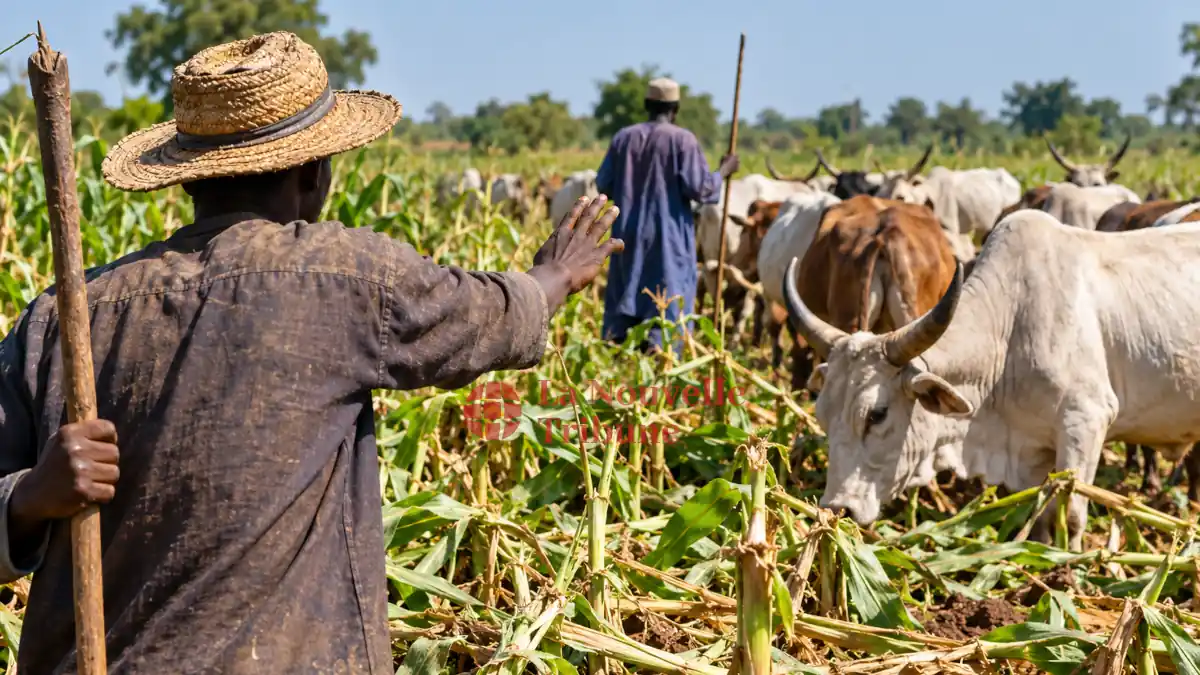
An agricultural worker in Kika, Tchaourou commune, suffered a severed hand on 20 October 2026 after a herder attacked him with a machete. The violence erupted following a dispute over cattle destroying crops on the farmer's land. This specific incident on 20 October 2026 notes the ongoing physical risks associated with the management of land and livestock in the region.
National records indicate that tensions between sedentary farmers and transhumant herders remain a concern despite recent trends. Data from the agricultural sector performance review shows that conflicts between these groups recorded a 42.8% decline in 2025. Authorities continue to monitor these interactions as rural communities manage the overlap of pastoral and agricultural activities across the country. The agricultural sector performance review provides this statistical context to help understand the scale of these interactions as they fluctuate from year to year.
Root Causes of Conflict
Cattle wandering remains the primary driver of rural friction across Benin. Official data indicates that over 50% of agropastoral disputes originate from livestock trampling on cultivated fields. These incidents frequently involve the destruction of essential local crops, including corn, millet, cowpea, and rice. Farmers report that the movement of herds across non-designated land continues to create significant friction in agricultural zones. Local authorities observe that the overlap of pastoral grazing and crop production creates recurring points of failure for land management. Efforts to mitigate these occurrences center on managing herd movement to prevent damage to harvests. The persistent nature of these crop-related losses continues to shape the interactions between transhumant herders and sedentary farming communities throughout the country.
Government and Local Initiatives
Garde des Sceaux Yvon Déchénou led a government delegation to Covè in June 2024. The officials met with local leaders to discuss the management of agropastoral conflicts within the region. This meeting aimed to address the friction occurring between sedentary farmers and transhumant herders. The delegation sought to facilitate dialogue and establish clear expectations for land usage among the involved parties.
The Ministry of Agriculture, Livestock and Fisheries (MAEP) currently manages a general livestock census. This initiative involves the identification of cattle through the use of QR code ear tags. The ministry utilizes the Agratime platform to record data and track livestock movement across the country. By digitizing the identification process, the ministry aims to improve oversight of herd locations.
Mayor Pélagie Gowui organized a meeting in Lalo during October 2026. Participants included local farmers, herders, security forces, and administrative officials. Attendees worked to establish a peaceful pastoral watch designed to improve communication between these groups and prevent future disputes. This collaborative approach seeks to integrate security forces and local leadership into a unified framework for monitoring rural interactions. Through these local meetings, officials hope to minimize the potential for violent escalations like those seen in Tchaourou commune.